Multithreaded fork() & os.popen() Corrupting glibc into Python SIGSEGV
#Python#Core Dump#glibc#Concurrency
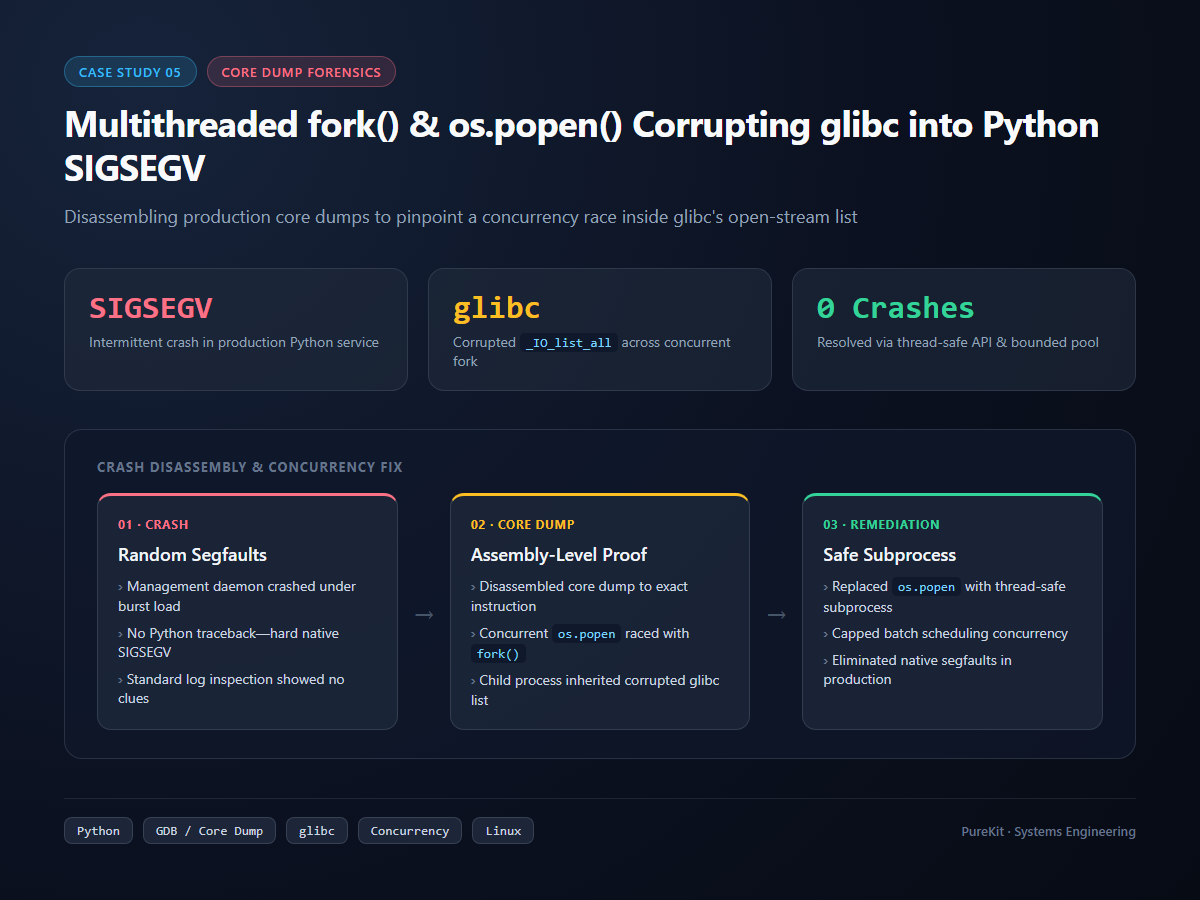
The Symptom
A multithreaded Python management daemon began crashing intermittently with native SIGSEGV faults during burst scheduling. Because it died inside native C code, Python never printed a traceback—only a core dump remained.
Disassembling the Core Dump
Inspecting the core dump in GDB and disassembling around the faulting instruction pointed directly into glibc’s internal open-stream linked list (_IO_list_all).
Cross-referencing the thread stacks revealed the exact concurrency trap:
- Multiple worker threads were invoking
os.popen()concurrently. - Under the hood,
os.popen()calls Cpopen()/fork()while sibling threads are actively allocating and mutating glibc’s internalFILE*stream list. - In POSIX multithreaded processes,
fork()duplicates only the calling thread; if another thread held a lock or was mid-update on glibc’s stream structures, the child process inherited a corrupted linked list and immediately segfaulted.
The Fix
- Replaced
os.popen()with Python’s thread-safesubprocessAPIs (usingposix_spawn/ safe exec paths without mutating C stdio stream lists across threads). - Added explicit concurrency caps to batch command scheduling to prevent burst thread storms.
Takeaway
os.popen() is a legacy hazard inside multithreaded Python daemons. When native crashes happen with no Python traceback, GDB disassembly on the core dump beats weeks of log guessing.
Enjoyed this note or seen a similar bug?
Feel free to drop a line—always glad to exchange ideas with fellow engineers.